


Author: MailClickConvert Team
Last Updated: December 2025
Reliable email sending depends on more than writing a message and clicking send. Every email moves through a series of servers before it reaches someone’s inbox, and the way that message travels has a major impact on whether it gets delivered at all.
This is where SMTP relays come in. They handle the technical work of moving your message from your system to the recipient’s inbox while protecting your domain and sender reputation.
This guide breaks down what an SMTP relay is, how it works, and why it matters for anyone sending cold email or transactional messages.
What Is an SMTP Relay?
SMTP stands for Simple Mail Transfer Protocol, the standard method email servers use to send and receive messages.
An SMTP relay is a service that passes an email from one mail server to another until it reaches the destination server.
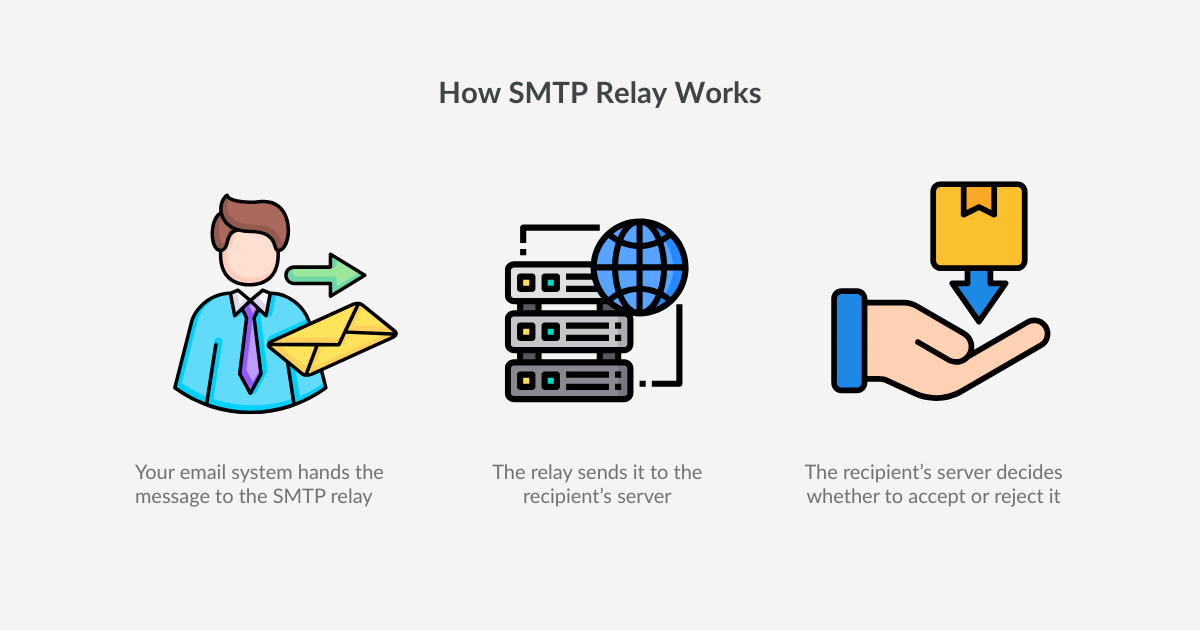
A simple way to think about it:
- Your email system hands the message to the SMTP relay
- The relay sends it to the recipient’s server
- The recipient’s server decides whether to accept or reject it
Without a relay, you’d be responsible for managing everything from connection handling to authentication to routing.
Learn more about SMTP Relay, read 🔗 What is SMTP? Beginner’s Guide
How Does SMTP Relay Work?
When you send an email, whether through a cold email platform, CRM, or your own app, the following steps happen behind the scenes:
- Your application hands the message to an SMTP server.
- The server opens a connection to the recipient’s email server.
- Both sides authenticate and exchange identifying information.
- The SMTP relay sends the sender address, recipient address, and message data.
- The receiving server checks the message, evaluates your reputation, and either accepts or rejects it.
- If it’s accepted, the receiving server delivers it to the inbox or spam folder.
If anything goes wrong, busy servers, temporary blocks, DNS issues, the relay handles retries and error reporting.
For more on how receiving servers decide placement, see 🔗 Google’s postmaster guidelines
Why SMTP Relay Matters for Email Sending
Email deliverability isn’t based only on content. It depends heavily on the reputation of the server sending your emails.
SMTP relays help because they:
- maintain established, trustworthy IP addresses
- manage sender reputation
- control retry attempts and bounce handling
- reduce the chances of your domain getting flagged
- help avoid blocklists and spam filtering
If your message is sent from a server with a weak reputation, inbox providers may block or filter it, even if the message itself is completely harmless.
Key Benefits of Using an SMTP Relay
1. Stable sending infrastructure
Good relays use clean IPs and keep them monitored, reducing deliverability issues.
2. Higher inbox placement
A server with a strong reputation is far more likely to land in inboxes rather than spam.
3. Ability to send large volumes
Your normal email provider limits how many emails you can send. Relays let you send more without restrictions.
4. Better reporting and bounce handling
Relays track errors, bounces, and failures so you know exactly why something didn’t send.
5. Less technical maintenance
You don’t need to handle server setup, warm-up, monitoring, or troubleshooting.
SMTP Relay vs. Using Your Own Email Server
Managing your own SMTP server is possible, but it comes with extra responsibilities:
- manual setup and configuration
- regular monitoring
- IP warm-up
- troubleshooting downtime
- dealing with spam complaints
- maintaining domain and IP health
Unless you have a dedicated deliverability expert, running your own server usually leads to more workload and more risk.
SMTP relays remove that burden by handling all infrastructure and reputation management for you.
Only very large companies with internal deliverability teams typically run their own servers successfully.
Related Read 🔗 Dedicated SMTP vs. Shared SMTP: Which One Should You Use for Bulk Mailing?
When You Should Use an SMTP Relay
SMTP relays are useful when:
- you send cold email or outreach in large numbers
- you send transactional messages like receipts, alerts, or confirmations
- you need consistent deliverability
- your current server has reputation or blocklisting issues
- your email app or CRM requires SMTP credentials
If email is important to your business, an SMTP relay becomes part of the foundation.
Common SMTP Terms Explained (Simple Version)
- SMTP server: The system that sends and receives email.
- Sending IP: The internet address your emails come from.
- Open relay: A server that sends mail without restrictions (dangerous and usually blocklisted).
- Authentication: Methods like SPF, DKIM, and DMARC that prove your message is legitimate.
- SMTP error codes: Messages explaining why an email bounced or couldn’t be delivered.
These basics help explain how sending decisions are made behind the scenes.
What to Look for in an SMTP Relay Provider
Choosing the right provider makes a big difference. Look for:
- a strong reputation and clean IP history
- clear reporting and error tracking
- simple documentation
- helpful support
- high delivery speed
- transparent status updates
- no hidden throttling or sending limits
A provider that clearly explains what went wrong and why is far more valuable than one that simply says “delivery failed.”
How MailClickConvert Uses SMTP Infrastructure
MailClickConvert relies on strong SMTP routing to send cold emails safely and consistently.
Our system manages the sending workflow, protects your reputation, and ensures that your messages follow a natural sending pattern.
MCC handles:
- safe delivery through trusted SMTP infrastructure
- controlled sending behavior that avoids risky activity
- proper handling of soft bounces and retries
- time-of-day sending based on best engagement periods
- suppression of invalid or previously bounced addresses
- automatic removal of engaged and replied contacts
This lets users send cold email without managing the technical side of SMTP servers, IPs, or deliverability issues.
Final Thoughts
SMTP relays make modern email sending reliable. They handle the routing, reputation checks, and server communication that decide whether your email reach the inbox or disappears into a spam filter.
Most businesses don’t need to run their own server. A reliable SMTP relay allows you to send outreach, transactional emails, and bulk messages without worrying about the backend.
If deliverability matters to your business, understanding SMTP relays is one of the most helpful steps you can take.
FAQs
Q1: What is an SMTP relay?
An SMTP relay is a service that passes emails from your server to the recipient’s server, ensuring proper delivery and maintaining sender reputation.
Q2: Can I send bulk emails without an SMTP relay?
Yes, but without a relay, emails may be blocked or sent to spam due to weak server reputation or volume limits.
Q3: How do I choose the best SMTP relay provider?
Look for strong reputation, clear reporting, fast delivery, helpful documentation, and no hidden limits.
Q4: What is the difference between an SMTP relay and an SMTP server?
An SMTP server sends and receives emails. An SMTP relay acts as a trusted intermediary to improve delivery and protect reputation.
- Log in to post comments