

Author: MailClickConvert Team
Last Updated: December 4, 2025
Cold email rarely gets a reply on the first try. Most people respond after a reminder, not the initial message. This is why follow-ups matter. They bring your message back into view without starting the conversation all over again.
In 2025, follow-ups play an even bigger role because inbox habits continue to shift. People check email in short breaks, not in long blocks like before. A good email follow-up sent at the right time has a better chance of being noticed.
So the question becomes simple: How many follow-ups should you send, and when?
This guide explains the most practical approach based on real cold email behavior.
Why Follow-Ups Matter
A follow-up works because it reintroduces your message in a moment when the person might actually have time to look at it. The first email often lands at an inconvenient time, during a meeting, while someone is away from their desk, or when they’re clearing older messages from their inbox. A second or third email may appear at a calmer moment when they’re more open to reading something new.
Follow-ups also help create a clear email thread. When someone sees a short reminder above your earlier message, it gives context and makes replying easier.
If you want to understand why some contacts never see your first email at all, you can read: 🔗 The Role of List Cleaning in Cold Email Success
How Many Follow-Ups Should You Send?
A practical range for cold outreach is three to five follow-ups. This range gives your message enough chances to be seen without going too far.
A short breakdown:
- Less than 2 follow-ups → often not enough to catch someone at the right moment
- 3–5 follow-ups → the range where most replies happen
- More than 6–7 → replies drop sharply and the contact may lose interest
Different industries may require slight adjustments. Formal or regulated sectors should stay on the lower side, while founders, agencies, and smaller teams often reply later in the sequence.
A Simple Follow-Up Schedule That Works
Here’s an easy timeline that fits most follow-up sequence styles:
- Initial Email — Send on a mid-week morning or afternoon
- Follow-Up 1 — 2 days later
- Follow-Up 2 — 3–4 days later
- Follow-Up 3 — 5–7 days later
- Follow-Up 4 — About one week later
- Follow-Up 5 — Final message after another week
For purchased lists, adding 1–2 extra days between messages usually produces better follow-up results.
What Makes a Good Follow-Up Email?
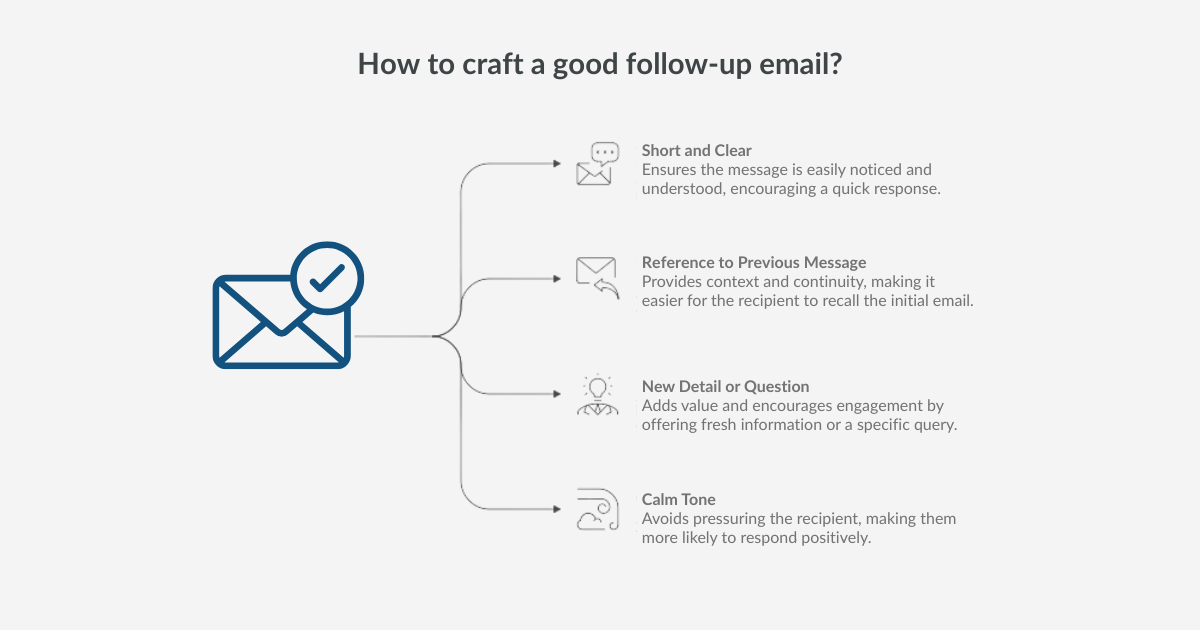
A follow-up should be short and easy to respond to. Length doesn’t help here, clarity does. The goal is to give the person a simple opening to reply.
Good follow-ups normally include:
- one short reference to your earlier message
- one new detail, idea, or question
- a calm tone that doesn’t pressure the reader
These light touches make the message easier to notice and respond to.
For more on improving engagement, see 🔗 How to Use Engagement Signals to Improve Future Cold Emails.
Knowing When to Stop Following Up
If you have sent five to seven emails with no opens or replies, it’s usually time to stop. Sending more won’t change much. You should also consider stopping earlier if:
- your open rate drops across several follow-ups
- the industry is formal or highly regulated
- the contact clearly isn’t engaging
Ending at the right time protects your domain and keeps your outreach respectful.
How Timing Affects Your Follow-Up Success
Since most people check email in short breaks, timing affects whether your follow-up gets noticed.
The most reliable hours are:
- 9:00 AM – 11:00 AM
- 1:30 PM – 3:00 PM
These times fit naturally into a typical workday. Afternoon follow-ups often bring more replies because people have a little more time to answer. If someone opened a previous email during a specific time window, follow up during that same window again.
Follow-Up Timing for Purchased Lists
Purchased lists respond better when follow-ups are sent with a lighter frequency. Leaving three to five days between each message gives your email room to be noticed. Keeping each message short also helps because the contact doesn’t know you yet.
Mid-morning or early afternoon works best for this type of list, since these are calm inbox periods.
If you want to understand the risks of purchased data, read: 🔗 Purchased Lists Guide
Short Follow-Up Examples
Here are simple examples written in a neutral tone:
Short reminder:
“Just checking if you saw my note from earlier this week.”
Simple question:
“Would this be something you’d want to look into, or should I reach out to someone else?”
New angle:
“I’m writing again because I thought this part might be more relevant.”
Final message:
“This will be my last note. If now isn’t a good time, no problem.”
How MailClickConvert Helps With Follow-Ups
MailClickConvert handles many details that influence how well your follow-ups land. Instead of sending all reminders at once, the system spreads them out naturally so they appear at reasonable moments during the day. Each email goes out at your preferred contact’s local time, which keeps your timing consistent.
MailClickConvert also shows which hours your contacts open and reply the most, helping you schedule follow-ups based on real behavior. People who have already replied are removed from the sequence automatically, so no one receives messages they shouldn’t.
The system keeps track of opens, clicks, and ignored messages without an extra step. If engagement slows down during certain hours or stages, MailClickConvert gives reports of your campaigns so you can adjust your campaign schedule smoothly.
All of this helps you maintain a steady follow-up plan without having to manage every detail manually.
Final Thoughts
Most replies in cold outreach come after a follow-up, not the first email. Sending three to five reminders is a simple and effective range that works across many industries. Following up during mid-morning or early afternoon increases your chances of catching people when they have time to read.
The goal is to keep your messages simple, spaced out, and easy to reply to. When you’re ready to send your sequence, MailClickConvert helps handle the timing and delivery so you can focus on writing good follow-ups instead of managing the process.
- Log in to post comments