

Author: MailClickConvert Team
Last Updated: December 2025
Email isn’t a single category. A password reset and a product newsletter may both arrive in the inbox, but they serve very different purposes and are treated differently by inbox providers.
This distinction matters more than most teams realize. Sending marketing and transactional emails through the same SMTP setup or SMTP relay service can gradually introduce delivery issues. Understanding how SMTP relays support each type helps teams prevent problems before they affect inbox placement or reliability.
This guide explains the difference between marketing and transactional email, how email delivery works, how SMTP relays handle each, and why choosing the right setup matters for long-term email reliability and email server reputation
Understanding Marketing and Transactional Email
Transactional emails are triggered by a specific user action or system event. Examples include password resets, login alerts, order confirmations, invoices, shipping updates, and account notifications. These messages are expected by the recipient and are usually time-sensitive.
Marketing emails are sent to inform, promote, or engage. Newsletters, feature announcements, onboarding campaigns, promotional offers, and cold outreach all fall into this category. These messages are usually sent in batches and are not tied to an immediate user request which directly affects marketing email deliverability
Inbox providers understand this distinction. Transactional emails are generally considered necessary for the user experience, while marketing emails are evaluated more aggressively for relevance and engagement. This difference affects how SMTP relays should be configured and used to protect email reputation management
What Role SMTP Relays Play in Both Email Types
SMTP relays act as the delivery layer between your sending system and the recipient’s mail server. They handle email routing, authentication, retries, and error reporting. Regardless of email type, SMTP is responsible for moving messages between servers.
The difference lies in how the relay is used. Transactional email usually flows at a steady pace, triggered by user behavior. Marketing email often arrives in larger volumes and follows scheduled campaigns, making smtp sending limits and sending behavior more important.
SMTP relays help manage these patterns. They control connection behavior, manage sending limits, and provide visibility into delivery outcomes. When configured correctly, they support both email types without conflict. When configured poorly, they can mix signals in ways that hurt email server reputation.
SMTP Relays for Transactional Email
Transactional email prioritizes reliability. When a user requests a password reset or completes a purchase, delays can cause frustration or support issues.
SMTP relays support transactional email by prioritizing consistency and predictability. Messages are sent individually or in small bursts, usually tied directly to user activity.
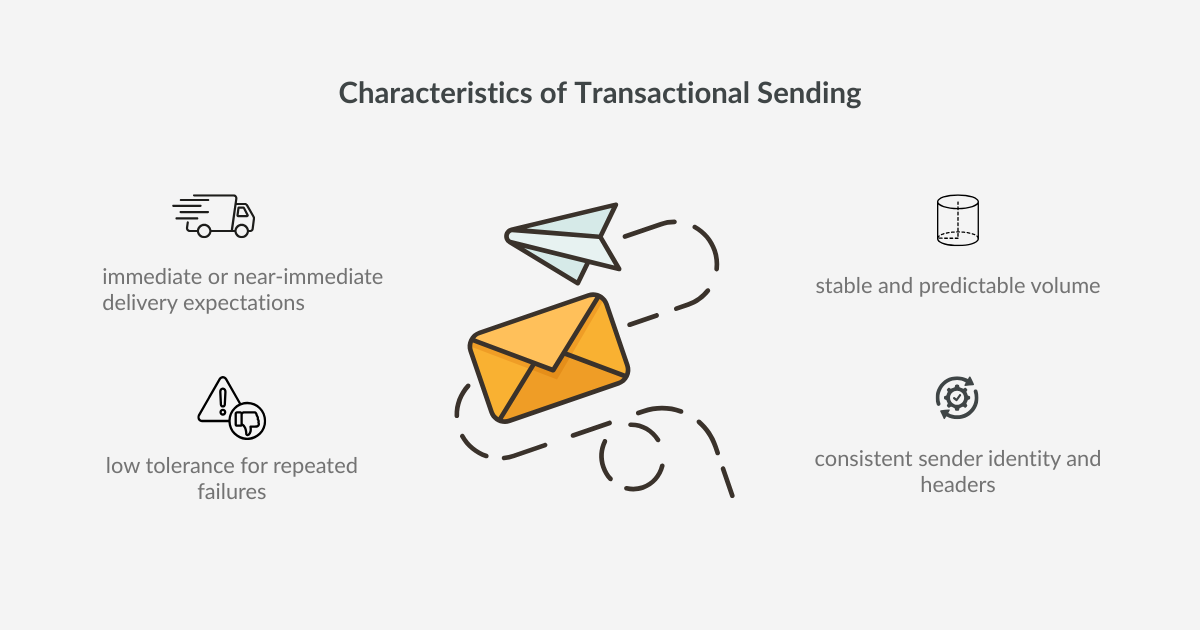
Key characteristics of transactional sending include:
- immediate or near-immediate delivery expectations
- low tolerance for repeated failures
- stable and predictable volume
- consistent sender identity and headers
Because transactional emails often receive high open rates and engagement, they tend to build strong reputation signals. SMTP relays help preserve this by ensuring clean email routing, handling retries carefully, and avoiding sudden changes in sending behavior.
For most setups, transactional email performs best when sent through infrastructure isolated from high-volume promotional traffic.
SMTP Relays for Marketing Email
Marketing email has a very different profile. Messages are often sent in bulk, sometimes to large audiences at once. Engagement varies widely, and some recipients may ignore or delete messages without opening them, directly affecting marketing email deliverability.
SMTP relays help manage marketing email by controlling volume, timing, and delivery patterns. Without these controls, large campaigns can overwhelm servers or trigger spam filtering.
Marketing-focused SMTP usage often includes:
- scheduled batch sending
- throttling to spread volume over time
- monitoring engagement signals
- managing unsubscribes and complaints
Because marketing email is more sensitive to filtering, SMTP relays must be careful about how quickly messages are sent and how errors are handled. Poor engagement or high bounce rates can affect the sending reputation if not managed properly.
Key Differences in SMTP Requirements
While both email types rely on SMTP relays, their requirements differ.Transactional email values speed and certainty. Marketing email values reputation protection and consistency over time.
Key differences include:
- delivery urgency versus delivery scale
- tolerance for delays and retries
- impact of engagement signals
- acceptable sending frequency
- sensitivity to complaints and unsubscribes
Using the same SMTP behavior for both can blur these signals. A sudden marketing campaign sent through transactional infrastructure may raise flags. Likewise, excessive throttling of transactional email can cause noticeable delays.
Should Marketing and Transactional Email Share the Same SMTP Relay?
This is a common question, and the answer depends on volume, risk tolerance, and use case.For small teams with low sending volume, a shared SMTP relay may work if sending behavior is controlled and consistent. In these cases, marketing campaigns are modest, and transactional email volume is stable.
As volume grows, sharing becomes riskier. Marketing email engagement tends to fluctuate, and poor performance can affect the reputation used by transactional messages. When that happens, critical emails may be delayed or filtered.
Separating marketing and transactional email either by relay, IP, or sending stream helps protect important messages from reputation issues caused by promotional traffic.
Common SMTP Mistakes When Sending Both Email Types
Delivery problems rarely appear immediately. They usually develop over time as sending behavior changes. Common mistakes include:
- sending large marketing campaigns from transactional infrastructure
- ignoring declining engagement in marketing email
- failing to suppress bounced or inactive addresses
- inconsistent sending schedules
- mixing multiple email purposes in a single stream
These issues often show up later as increased filtering, delayed delivery, or unexplained drops in inbox placement.
SMTP relays provide the tools to avoid these mistakes when paired with solid email sending best practices.
Choosing the Right SMTP Setup for Each Use Case
There is no single setup that works for every business. The right approach depends on how email is used and how important each message type is.
Transactional-heavy businesses benefit from infrastructure that prioritizes speed and reliability. Marketing-heavy teams benefit from relays that provide strong throttling, monitoring, and email reputation management.
Key factors to consider include:
- daily and peak sending volume
- how critical delivery timing is
- engagement patterns across campaigns
- growth plans and future scale
Choosing the right structure early reduces the likelihood of future deliverability issues.
How MailClickConvert Handles Marketing vs. Transactional Sending
MailClickConvert is design around these directions. The platform separates sending behavior based on email purpose and applies controls that reduce risk.
MailClickConvert manages:
- controlled sending patterns for outreach
- suppression of bounced, invalid, or previously contacted addresses
- separation between engagement-heavy and system-driven messages
- consistent delivery behavior across time zones
- visibility into delivery, opens, and replies
By managing SMTP behavior behind the scenes, MailClickConvert allows users to focus on messaging and targeting rather than infrastructure.
Final Thoughts
Marketing and transactional emails serve different roles, and SMTP relays should reflect that reality. Treating all email traffic the same increases risk, even if issues aren’t immediately visible.
Using a properly configured smtp relay service improves reliability, protects email server reputation, and keeps smtp email delivery predictable. As sending volume grows, these differences become more important, not less.
Understanding how SMTP relays support marketing and transactional email helps teams make smarter decisions and apply stronger email sending best practices before problems impact users or revenue.
Frequently Asked Questions
What is an SMTP relay service?
An SMTP relay service is a system that sends email on your behalf by routing messages from your application or email tool to the recipient’s mail server. It handles SMTP email delivery, retries, authentication, and error reporting, which helps improve reliability and protect sender reputation.
How does an SMTP relay service affect email deliverability?
A properly configured SMTP relay service improves email deliverability by controlling sending behavior, managing retries, and using trusted infrastructure. Inbox providers evaluate server reputation and delivery patterns, not just message content, when deciding whether to accept or filter emails.
Should marketing and transactional emails use the same SMTP relay?
In many cases, no. Marketing and transactional emails behave differently and are judged differently by inbox providers. Separating them at the SMTP relay or IP level helps protect transactional email delivery from reputation issues caused by fluctuating marketing email deliverability.
What is the difference between transactional email and marketing email?
Transactional email is triggered by a user action, such as a password reset or order confirmation, and is expected immediately. Marketing email is sent in batches to promote or inform. Because of this difference, SMTP setup and delivery behavior should be handled differently for each type.
How do SMTP sending limits impact email campaigns?
SMTP sending limits control how many emails can be sent within a given period. These limits help prevent abuse and protect email server reputation, but they also affect how quickly marketing campaigns can be delivered. SMTP relays manage these limits by spreading volume over time.
What are email sending best practices when using an SMTP relay?
Good email sending best practices include separating marketing and transactional traffic, monitoring engagement, respecting sending limits, and maintaining proper authentication. A strong email reputation management approach paired with the right SMTP setup leads to more predictable delivery.
- Log in to post comments