INDUSTRY Commercial debt collection

Compliance-sensitive outreach, on infrastructure that will take it.

Most mainstream platforms ban collection work by category, not by behavior, so there is nothing to appeal. Here it runs on isolated domains and dedicated IPs, with consumer accounts separated from commercial ones before anything sends.

What it covers
  • Creditor prospecting
  • Commercial debtor contact
  • Isolated infrastructure
  • Consumer accounts separated
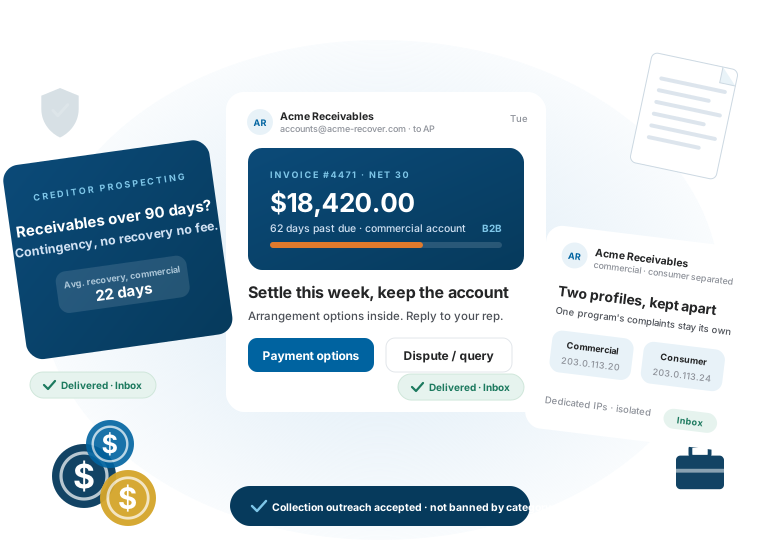
Three collection emails landing in the inbox: a past-due commercial invoice with payment options, a creditor prospecting offer, and a panel showing commercial and consumer accounts on separate IPs, each stamped delivered
20B+Emails delivered
250k+Campaigns completed
4,000+Customers
1B+Contacts validated
The distinction that matters

Commercial debt is not consumer debt.

The short answer

The FDCPA covers debts incurred for personal, family or household purposes. Debt owed by one business to another generally sits outside it, which is why commercial collection operates under different constraints from consumer collection. That distinction shapes what outreach is possible, and it is the first thing worth being precise about.

What that does not mean

It does not mean no rules apply. State law, contract terms and CAN-SPAM still do, and if any part of your book is consumer debt then Regulation F and the FDCPA apply to that part, including specific requirements on electronic communication. Mixed books need the two separated before anything sends, not after.

Why it breaks here

Why collection email gets blocked.

Almost none of this is about how the message is written. It is about category, infrastructure and how the book is split.

The platform bans the category outright

Most mainstream ESPs prohibit debt collection in the acceptable use policy. It is a category decision, so careful sending does not exempt you and there is nothing to appeal.

Complaint rates are structurally higher

Collection mail draws complaints normal marketing does not. On a shared IP pool that becomes every other customer's problem, which is why shared pools refuse it.

Consumer and commercial accounts are mixed

If any part of the book is consumer debt, the FDCPA and Regulation F apply to that part. Sending before the two are separated is the expensive mistake.

Skip-trace data was never verified

Located contact data decays quickly. Hard bounces at scale damage a sender faster in this category than almost any other.

It runs from the corporate domain

The domain your business operates on should never carry the complaint risk of debtor contact.

Campaign types

Six programs, split by who is on the other end.

Prospecting creditors is ordinary B2B outreach. Contacting debtors is the sensitive one. They never share infrastructure.

Prospecting

Winning creditor clients

B2B outreach to the businesses whose receivables you want to work. Long cycles, so persistence matters more than volume.

What it needsRecurring campaigns and firmographic targeting by industry, revenue and size.
Placement

Commercial debtor contact

Reaching businesses that owe. Higher complaint risk than any other program on this page, and it belongs nowhere near your corporate domain.

What it needsIsolated domains and dedicated IPs, with suppression applied strictly.
Pre-collect

First-party and early stage

Reminders sent on the creditor's behalf before an account moves to formal collection. Softer, higher-recovery, and lower risk.

What it needsSeparate sending identity per creditor, so one client's file cannot affect another's.
Portfolios

Buying and selling paper

Outreach to debt buyers, sellers and brokers. Small, specific audiences where accuracy matters more than reach.

What it needsVerified B2B data and tight targeting rather than volume.
Network

Attorney and forwarding networks

Building relationships with collection attorneys and forwarding partners across states. Ordinary professional prospecting.

What it needsGeography and practice-area selects, on the low-risk sending profile.
Payments

Plan follow-up and reminders

Keeping agreed payment plans on track. Recurring, predictable and the least contentious mail in the sector.

What it needsDate-triggered recurring campaigns and reply handling a human actually reads.

Data

B2B targeting, and your own placements.

Creditor prospecting uses ordinary firmographic data, available through the platform. Debtor contact data comes from you or your client, and we do not source it.

Consumer accounts are separated before anything sends. If any part of the book is consumer debt, the FDCPA and Regulation F apply to that portion, including specific requirements on electronic communication. If you cannot reliably tell which accounts are which, that is the problem to solve before a campaign, not during one. We are not your lawyers.

Where it applies

Two very different email programs.

Program 1

Agency prospecting to creditors

Ordinary B2B outreach to the businesses whose receivables you want to work. Nothing about it is unusual except the sales cycle.

  • Target by industry, revenue, employee count and geography
  • Behaves like normal B2B prospecting, with normal deliverability
  • Long cycles, so recurring campaigns matter more than one-off blasts
Program 2

Contacting commercial debtors

Higher complaint risk, higher scrutiny, and it belongs nowhere near your corporate domain.

  • Isolated sending domains and dedicated IPs, always
  • Suppression and complaint processing applied strictly
  • Consumer accounts separated out before anything sends
Why the usual platforms refuse

Three reasons collection agencies end up here.

1

Category bans

Many mainstream ESPs prohibit debt collection outright in their acceptable use policy, regardless of how carefully you send. It is a category decision rather than a behavior one, so there is nothing to appeal.

2

Complaint sensitivity

Collection mail draws complaints at rates normal marketing does not. On a shared pool that is everyone else's problem too, which is precisely why shared pools will not host it.

3

Skip-trace data

Located contact data is purchased data, and purchased data breaches most platform terms. Here it is accepted, verified first and ramped properly.

On compliance. We handle the sending-side mechanics: CAN-SPAM defaults with a physical address and unsubscribe link, list-unsubscribe headers, suppression and complaint processing, and regional filtering. Whether a given account is commercial or consumer, and what that requires of you under the FDCPA, Regulation F and state law, is yours to determine. We are not your lawyers. What we will do is refuse work where the plan looks likely to cause a problem, and say why.

Who we work with

Four kinds of operation, four different problems.

Commercial collection agencies

B2B receivables, generally outside the FDCPA, but banned by category on most mainstream platforms.

Law firms with a collections practice

Bar advertising rules on top of everything else, and a firm domain that must stay clean.

Debt buyers

Portfolio outreach and placement volume, with mixed books that need separating first.

Creditors collecting in-house

First-party contact, lower risk than third-party placement, and usually the simplest setup here.

Plans start at $249 a month.

Agencies typically run creditor prospecting and debtor contact on separate profiles inside one account. Every plan carries dedicated IPs, verification credits worth 25% of your send volume, and no annual contract. Setup is a one-off $99.

Other industries

We do this for other sectors too.

Questions

Commercial debt collection, answered.

Does the FDCPA apply to commercial debt collection?
Generally not. The FDCPA covers debts incurred for personal, family or household purposes, so business-to-business debt usually sits outside it. That does not mean no rules apply: state law, your contracts and CAN-SPAM still do, and any consumer accounts in your book bring the FDCPA and Regulation F with them. We are not your lawyers and this is not legal advice.
We have a mixed book. Can you still help?
Yes, but the consumer and commercial portions have to be separated before anything sends rather than afterwards. They carry different legal requirements and different risk, so they run as separate programs on separate sending profiles. If you cannot reliably tell which is which, that is the problem to solve first.
Why do mainstream platforms refuse collection work?
Usually a category ban in the acceptable use policy rather than a judgement about you specifically, which means there is nothing to appeal. The underlying reason is complaint rates: collection mail draws complaints that normal marketing does not, and on a shared IP pool that becomes every other customer's problem.
Can we email skip-traced contact data?
Yes. Located contact data is purchased data and is accepted on every plan, provided it is verified first and the send is ramped properly. Verification matters more here than almost anywhere, because skip-trace files decay quickly and hard bounces at scale are what damage a sender.
Can this run from our corporate domain?
No, and we will push back if you ask. Collection outreach carries complaint risk that should never be able to touch the domain your business runs on. Isolated sending domains and dedicated IPs are part of the build rather than an upgrade.
Do you work with agencies prospecting creditors, or with the collection itself?
Both, and they are different programs. Prospecting creditors is ordinary B2B outreach with ordinary deliverability. Contacting debtors is the sensitive one and gets isolated infrastructure and stricter suppression. Most clients run the first, and the second is the one that needs the conversation.
Get started

Tell us what the book looks like.

Commercial, consumer or mixed, and which of the two programs you need. If any part is consumer debt, say so up front, because it changes the whole shape of the answer.

  • Sending isolated from the domain your business runs on
  • Consumer and commercial kept as separate programs
  • We will refuse work where the plan looks likely to cause a problem

Prefer to talk? 1-800-604-5058

We reply within one business day. No sequence, no drip.

Category bans are not appeals processes.

If a platform has banned your industry outright, no amount of careful sending changes that. Tell us what you need to send and we will tell you whether we will take it.