INDUSTRY Print, signage and local B2B

Regional prospecting, at a cost per contact that makes sense.

A sign or a print run is worth hundreds, which rules out expensive channels and rules in reach. Put a relevant offer in front of every business of the right type within a radius, four times a year, for less than one trade show stand.

What it covers
  • Geography and SIC targeting
  • Data sourced or bring your own
  • Recurring campaigns
  • Small-ticket economics
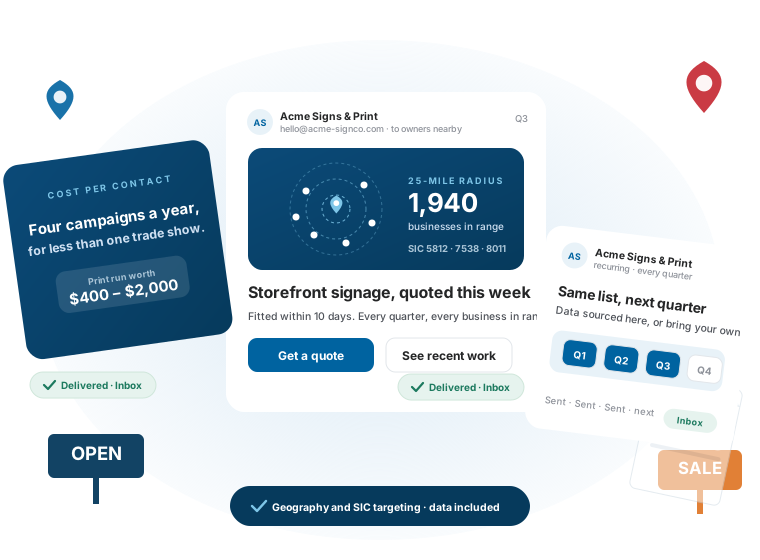
Three print-shop emails landing in the inbox: a storefront signage quote to businesses in a 25-mile radius, a cost-per-contact comparison, and a quarterly campaign schedule, each stamped delivered
20B+Emails delivered
250k+Campaigns completed
4,000+Customers
1B+Contacts validated
The economics

Small tickets mean the maths only works at volume.

The short answer

A sign, a print run or a uniform order is worth hundreds, not tens of thousands. That rules out expensive per-contact channels and rules in reach. The job is to put a relevant offer in front of every business of the right type within a radius, repeatedly, at a cost per contact low enough that a few percent response still pays.

Why it breaks here

Why local B2B email underperforms.

The failures here are economic as much as technical. At these ticket sizes a channel either scales cheaply or it does not work at all.

It is sent from the business inbox

Mailbox providers throttle hard above a few hundred a day, and one complaint spike affects the address customers reply to.

The territory list is two years old

Small businesses open, close and change hands constantly. A regional file decays faster than almost any other B2B data.

Everyone gets the same message

A twelve-person shop and a regional chain are not the same buyer, and a single generic offer converts neither.

It happens once, then stops

Local markets do not exhaust, they forget. One mailing a year loses to four, and the cost of showing up is almost nothing.

Cost per contact is too high to work

A sign or a print run is worth hundreds. Channels priced for enterprise deals cannot carry that arithmetic.

Campaign types

Six ways to work a finite territory.

There is a countable number of businesses within your delivery radius. The job is reaching all of them, repeatedly, at a cost per contact small tickets can carry.

Coverage

The whole territory, quarterly

Every business of the right type inside your radius, hit four times a year with a different reason each quarter. Local markets do not exhaust, they forget.

What it needsGeographic and SIC targeting, and recurring campaigns rather than a rebuild each time.
Seasonal

Event and calendar driven

Trade show season, back to school, election signage, holiday print runs. The same finite market with a new hook.

What it needsScheduled sends and message rotation, so the fourth mailing does not read like the first.
Reorders

Repeat business from existing customers

The cheapest revenue in the sector. Customers who ordered once and were never asked again.

What it needsA warm sending profile kept separate from cold prospecting.
New openings

Businesses that just arrived

New premises need signage, print and uniforms immediately, and the firm that arrives first usually wins.

What it needsFresh data on the territory rather than a list bought two years ago.
Quotes

Following up estimates that went quiet

Quotes sent and never chased. In a low-ticket sector this is the highest-margin outreach available.

What it needsTrigger-based follow-up and replies landing where the sales desk sees them.
Reactivation

Customers who drifted

Buyers from two years ago who simply stopped. Warm data, and it responds unlike anything cold.

What it needsVerification first, because small-business files decay fast as firms close and change hands.

Data

Every business of a type, inside a radius.

This is one of the few sectors where the addressable market is genuinely finite and knowable. Data can be sourced through the platform or you can bring a list you already own.

Small-business files decay faster than most. Firms open, close and change hands constantly, so a territory list bought two years ago is materially wrong today. Verification before a first send matters as much here as anywhere, and it is why plans include credits rather than selling them separately.

Who we work with

Four kinds of business, one shared problem.

Print and mailing

Low ticket, high frequency, and a customer base that reorders if anyone asks them to.

Signage and wide format

Project-based and often triggered by an event, so timing beats volume.

Promotional products and uniforms

Seasonal peaks and long gaps, which makes reactivation the main game.

Local trade and service firms

Anyone selling to businesses within a delivery radius. The economics are identical.

Plans start at $249 a month.

Most local B2B senders are comfortably inside the entry plan, and we will say so rather than sell you headroom. Every plan carries dedicated IPs, verification credits worth 25% of your send volume, and no annual contract. Setup is a one-off $99.

Other industries

We do this for other sectors too.

Questions

Print, signage and local B2B, answered.

Is email still worth it for local B2B?
At these ticket sizes it is one of the few channels where the arithmetic works. A sign or a print run is worth hundreds, so cost per contact has to stay very low for a few percent response to pay. Reaching every relevant business in a territory four times a year costs less than a single trade show stand.
Where does the data come from?
Either from Lead Finder inside the platform, targeted by geography, industry, SIC code, revenue, employee count and job title, or from a list you already own. Both get verified first, which matters here because small-business files decay quickly as firms open, close and change hands.
Won't we exhaust a local market?
Local markets do not get exhausted, they get forgotten. There is a finite number of restaurants within fifty miles, and the firm that appears four times a year gets the work that the one appearing once does not. The thing to rotate is the offer, not the list.
How much volume do we actually need?
Less than most sectors on this site, which is worth saying plainly. If your territory is 20,000 businesses and you send quarterly, that is 80,000 sends a year and the entry plan covers it comfortably. We will tell you when a smaller plan is the right answer.
Can we send from our normal business email?
For a handful of contacts, yes. At territory scale, no: mailbox providers throttle hard and one complaint spike can affect the address your customers use to reach you. Separate sending domains are the standard answer and they are part of the build.
Do you help write the campaigns?
We can. Managed outbound covers writing and running the whole program, which suits firms without a marketing person. Plenty of local businesses run it themselves on the platform after the first build, and that is a perfectly good outcome.
Get started

Tell us your territory.

What you sell, who buys it and how far you deliver. We will tell you roughly how many businesses that is and what covering them quarterly would cost.

  • A real count of the addressable market in your radius
  • If the entry plan covers you, we will say so
  • Sending kept off the address your customers reply to

Prefer to talk? 1-800-604-5058

We reply within one business day. No sequence, no drip.

A finite market, covered properly, four times a year.

That is the whole strategy in this sector and it is not complicated. Tell us what you sell and where, and we will size it.